
EVs. No Fear. Overcoming the Barriers to Purchasing Used Electric Vehicles in 2024.
At Kaisa we recently conducted a large-scale analysis of used car buyers’ behaviour across Europe, encompassing 3 million customer experiences, 100,000 dealers, and over 1 million high-intent consumers.
Zooming in on the behaviour of high-intent buyer personas revealed some interesting insights and underlined some of the problems that plague many dealerships when it comes to selling used EVs.
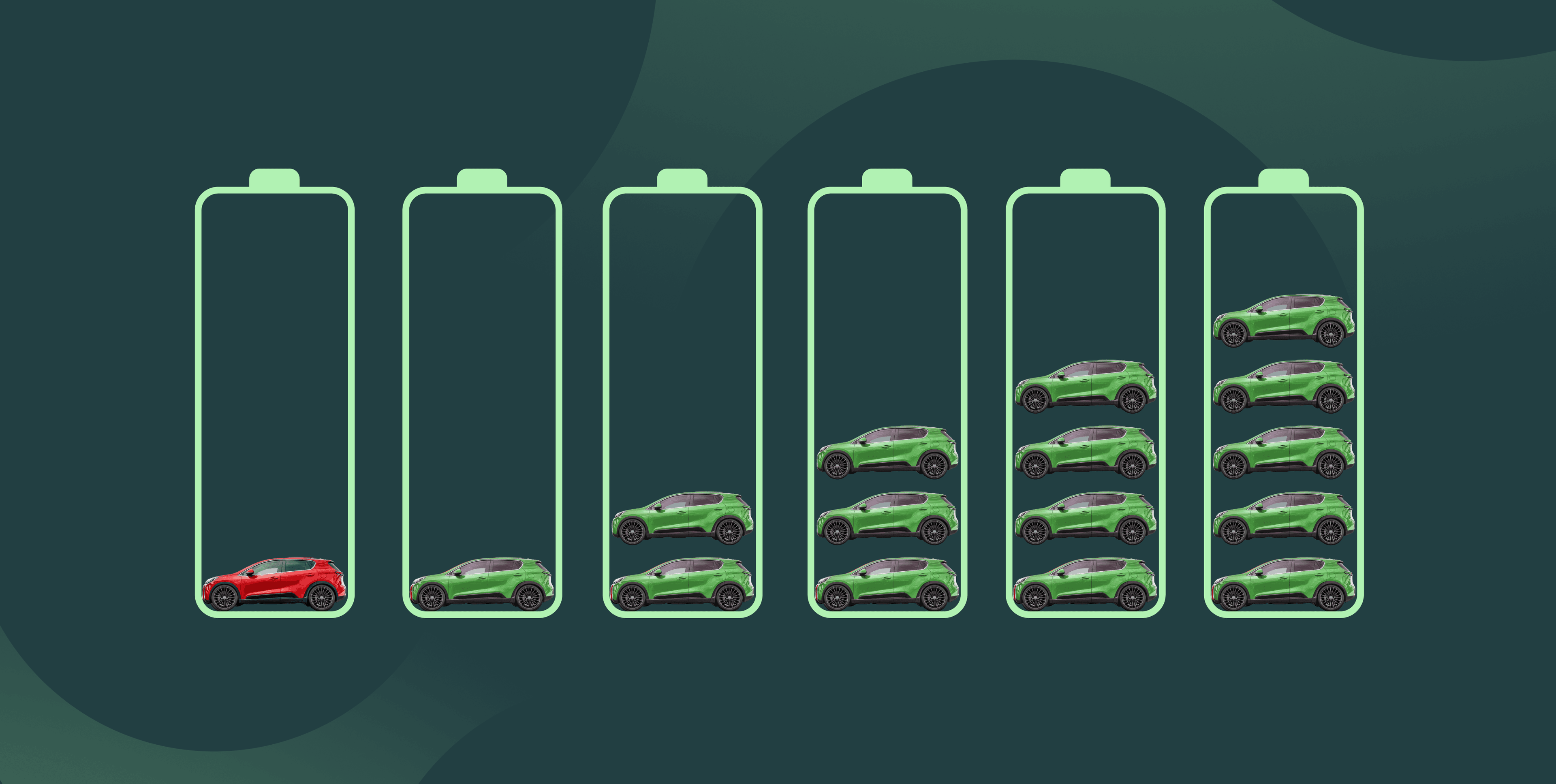
Our studies revealed that 43% of potential EV buyers who start their buying journey on auto marketplaces (we call them EV curious) are searching for both EV and ICE vehicles concurrently. This means that nearly half of all potential used EV buyers hesitate right at the beginning of their buying journey, before any contact with a seller.
Real-time intent
In an already tricky secondhand EV market, how could Kaisa help? Analysing millions of data points, our platform can detect different buyer personas and, with further real-time processing, predict high buyer intent. When alerted to this high-intent lead, dealers can build custom interactions to meet the specific needs and preferences of individual buyers.
Recharging enthusiasm
Personalised customer experience starts with understanding each buyer’s unique concerns and needs. For used EV buyers, these concerns often revolve around battery health – how much charging capacity has been lost, how this affects range, and whether there is still a warranty in place. Armed with this information, a seller could provide detailed battery data or ask the buyer what sort of range they need on a day-to-day basis to address the concerns. Additionally, because the dealer knows the buyer is also looking into, for example, buying a diesel vehicle, they can compare and contrast relevant models from their used inventory.
Talk about money
Different buyers have different financial situations and preferences. By knowing the price point of our buyer’s searches, dealers can offer deals or discounts, as well as customized financing options, highlighting specific incentives, such as government tax credits or rebates for used EVs. Tailoring these financial packages to meet the buyer’s budget and financial goals can significantly improve the likelihood of closing a sale.
Two Test Drives?
A personalized test drive experience can make a significant difference in the buying decision. For instance, allowing potential buyers to test an EV and an ICE vehicle, or taking the vehicle home for a day or two to help them understand how it fits into their daily routine. Providing tailored test drives that focus on features most relevant to the buyer, such as city driving, highway performance, or ease of charging, can showcase the vehicle’s strengths and align with the buyer’s priorities.
Aftersales
A personalised customer experience doesn’t end at the sale. Offering customised post-purchase support, such as personalised maintenance reminders, updates on software upgrades, and tailored tips for maximising battery life, can enhance customer satisfaction and loyalty. Providing access to exclusive owner communities or events can also create a sense of belonging and encourage positive word-of-mouth referrals or reputation scoring.
Takeouts
By focusing on a personalised customer experience, sellers can create a more engaging, informed, reassuring, and satisfying buying journey for potential used EV buyers. In a bumpy used EV market, this approach not only helps address the fear of switching to all-electric vehicles but also builds lasting relationships, creating trust and loyalty in an evolving Electric market.